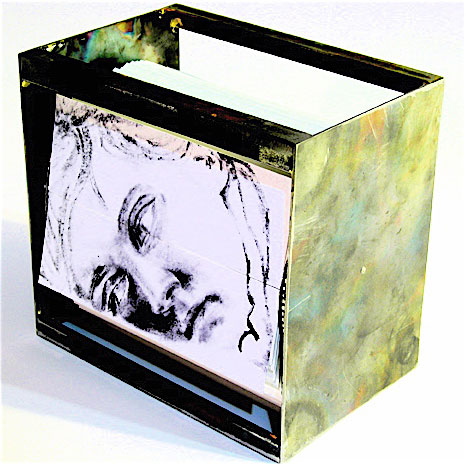
'Ornithology'
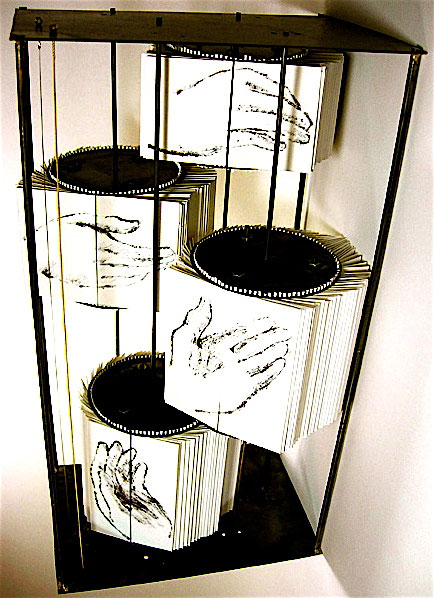
'Ornithology', 2015
12.7 x 9.4 x 10.1 cm.(Mixed media and collage on Bristol paper, stainless steel, motor, and electronics.
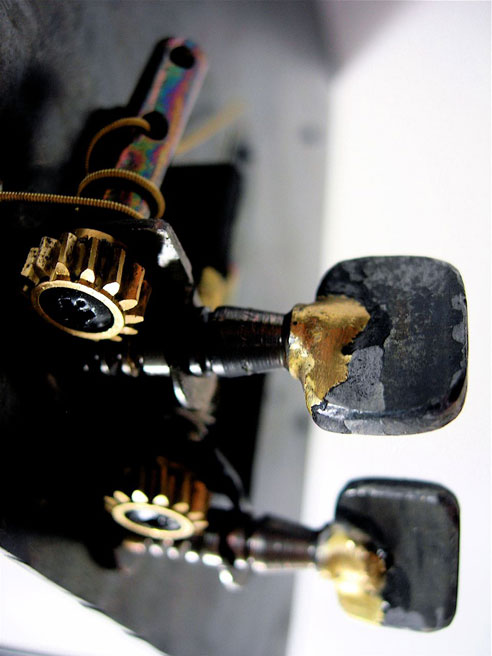
'Together', 2015
12.7 x 9.4 x 10.1 cm.(Mixed media and collage on Bristol paper, stainless steel, motor, and electronics.
JUAN FONTANIVE: Monday 20 February - Saturday 24 March
See-Sounds
installation film of four works in the ground floor gallery space
installation film of four works in the ground floor gallery space
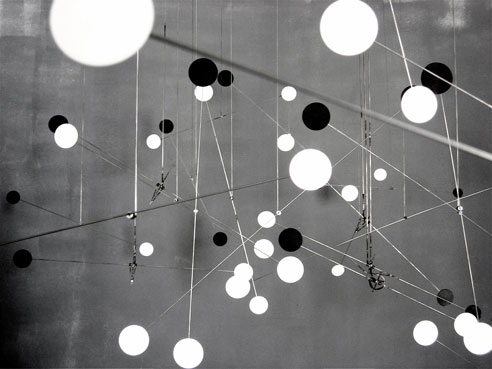
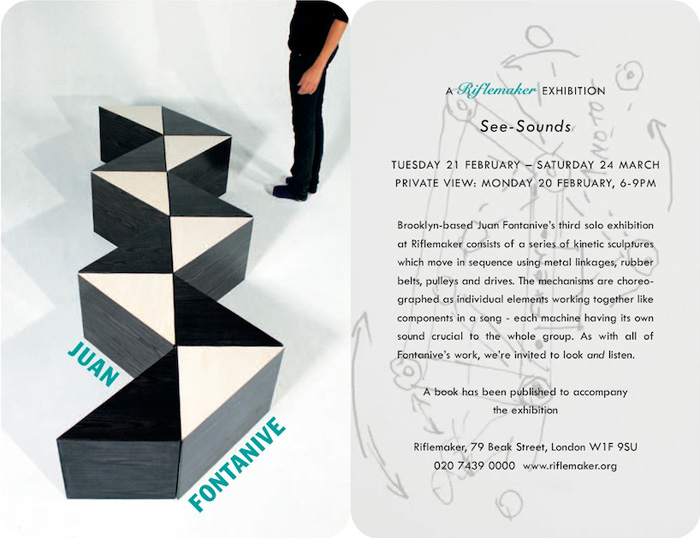
Brooklyn-based Juan Fontanive's third solo exhibition at Riflemaker consists of a series of kinetic sculptures which move in sequence using metal linkages, rubber belts, pulleys and drives. The mechanisms are choreographed as individual elements working together like components in a song - each machine having its own sound crucial to the whole group. As with all of Fontanive's work, we're invited to look and listen.
Click to download book (PDF)
Click to download book (PDF)
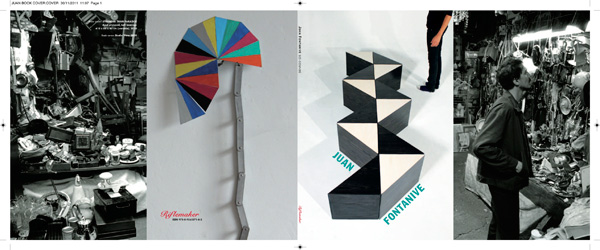
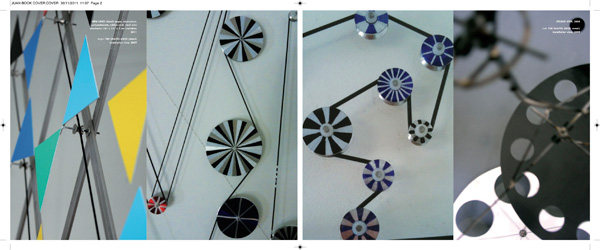
JUAN FONTANIVE (b. 1977, Cleveland, Ohio)
Juan Fontanive studied English and Textual Studies at Syracuse University, New York and Animation at The Royal College of Art, London.
He has presented three solo exhibitions 'Films without Light' (2016), 'Paper Films' (2006) and 'Tin Tan' (2008) at Riflemaker, London. Group exhibitions include 'Historie Naturelle' (2016), La Frontiera, Paris; 'For the Sake of the Image' (2010), Jerwood Space, London; 'Obsession': contemporary art from the Lodeveans Collection (2009), Stanley and Audrey Burton Gallery, Leeds; 'Indica' (2008) London and at Nyehaus, New York, and 'Ingenuity' (2007), The Gulbenkian Foundation, Lisbon (+ travelling exhibition of same). He won the Louise Wetherbee Phelps Award for Writing (1999) and the Desmond Preston Prize for Drawing (2004). He is represented by Riflemaker London and currently lives and works in Brooklyn, NY.
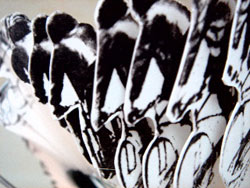
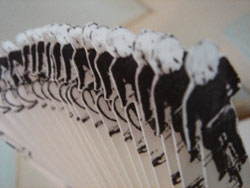
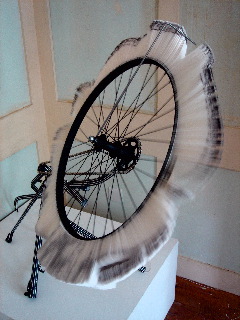
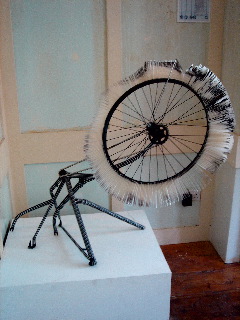
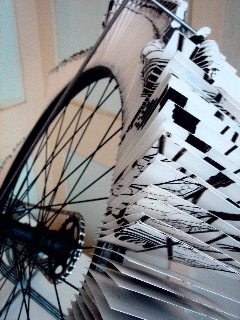
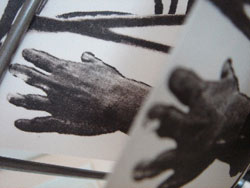
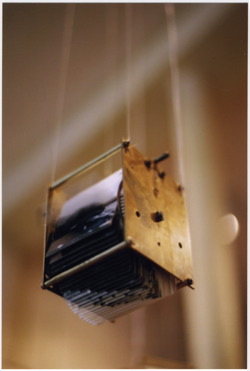
Juan Fontanive makes films without using light. Often recycling the mechanical parts of found clocks and pushbikes as the portable containers of his 'animations'. His interest lies in the beauty of sequential and repetitive movement. Hand drawn characters, human and typographical, occur in a cranky flip-book module powered by oxide. Pages fall in neat layers in the manner of a paper fountain, somewhere between film and sculpture - there is no 'screen' as such. His filmstock is often pulped card or metal leaves.
Juan Fontanive was born in 1977 in Cleveland Heights, Ohio. His family moved to Manhattan, New York and he attended Montessori schools. Juan's mother and sister are both painters and muralists that now work together. He often watched his mother at work in her studio, which inspired Juan to begin drawing. Another influence was his father's laboratory which contained jars filled with human organs, brains, an electron microscope, and other such things. His diagnosis of medical cases by analyzing cells under a microscope was similar, in a way, to the examination of individual frames of film. This shaped a large part of Juan's own attitude towards the moving image, which lies almost solely in the tedious, frame-by-frame handling found in animation.
In his undergraduate program, Juan made short 16mm films and combined them with interactive fiction, as part of a Liberal Arts degree in English and Textual Studies. Studying under an inspiring professor named Jeff Parker, he experimented with narrative using short fiction and flash fiction. H later continued these studies with Parker in Russia, and worked with contemporary poets and writers in St. Petersburg. These studies of broken/nonstandard narrative have led directly to the type of process he utilizes today.
"...I like to make things that dance..."
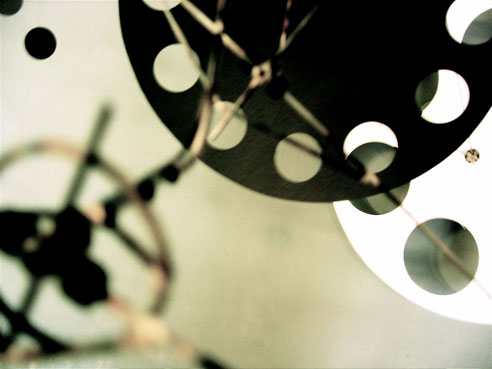
Fontanive's debut exhibition at Riflemaker consisted of a room of 'paper films'; mechanical flipbooks housed in tin cannisters reminiscent of an ammunitions factory clock or a 16mm cinema projector. These small modules, spools of paper attached to the wall or suspended on thin stalk-like legs, delivered a form of animated storytelling using revolving hand-drawn leaves of card and flickering Super 8 film.
An example of 'film without using light' as a projection source, the 'film' itself happens and exists inside of its own slightly cranky mechanism.
For 'Tin-Tan' Fontanive (b.1977 Cleveland, Ohio) has expanded both the physical scale and the illusionary aspect of the machines. The themes remain the same, sequential repetition of motion linked by a supposed and imagined narrative. The machines create natural 'shadows' and also have a uniquely comforting sound as the pages of paper or metal fall much like the turn of the film-sprocket of a hand-turned camera. There is comfort and an element of nostalgia in the resulting combination of both the rhythmic visual and sonic image.
"My influences include clocks, drums, repetition, things that hang from the ceiling. Physical quarrels, relationships (of objects), tigers, and the persistence of vision. Literary influences are Borges, Tolstoy, Chekhov, and the theorists Derrida and Althusser. Also, memory is a good source for ideas - I've been thinking recently a lot about the house I grew up in and dreams I've had about that house." Juan Fontanive.
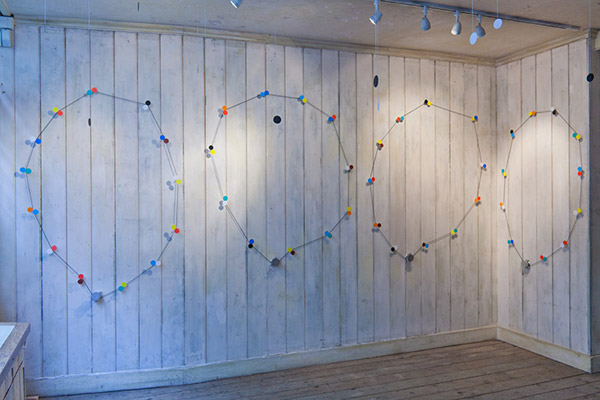
Installation view: Tabaré
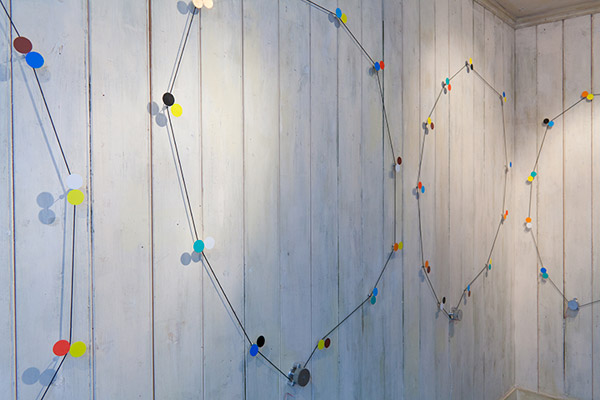
Installation view: Tabaré
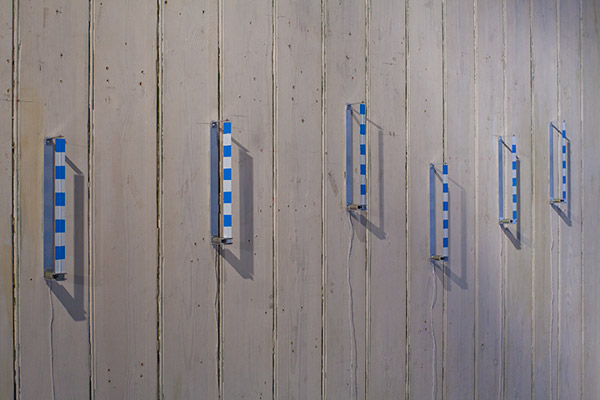
Installation view: Sounding Lines
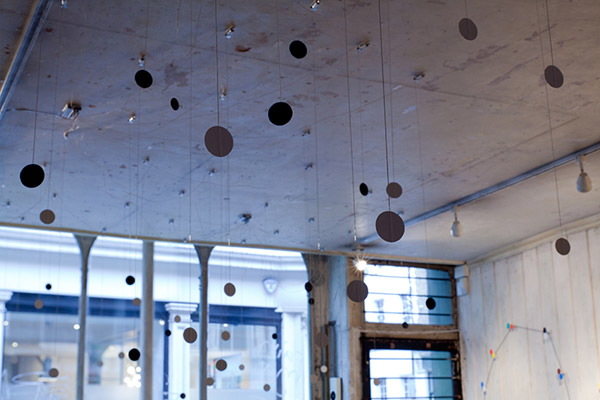
Installation view: Movement #2
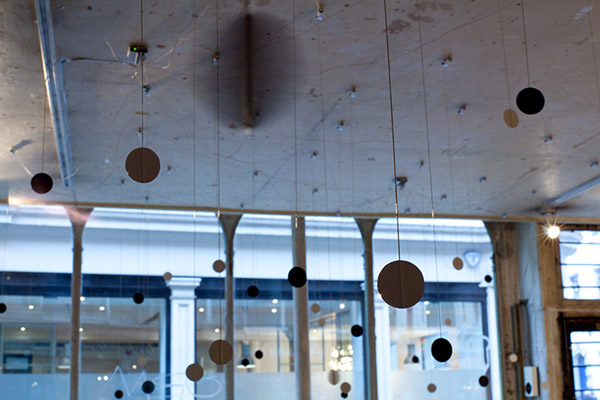
Installation view: Movement #2
 |
 |
 |
 |
 |
 |
JUAN FONTANIVE (b. 1977, Cleveland, Ohio)
Juan Fontanive studied English and Textual Studies at Syracuse University, New York and Animation at The Royal College of Art, London.
He has presented two solo exhibitions 'Paper Films' (2006) and 'Tin Tan' (2008) at Riflemaker, London. Group exhibitions include 'For the Sake of the Image' (2010), Jerwood Space, London; 'Obsession': contemporary art from the Lodeveans Collection (2009), Stanley and Audrey Burton Gallery, Leeds; 'Indica' (2008) London and at Nyehaus, New York, and 'Ingenuity' (2007), The Gulbenkian Foundation, Lisbon (+ travelling exhibition of same). He won the Louise Wetherbee Phelps Award for Writing (1999) and the Desmond Preston Prize for Drawing (2004). He is represented by Riflemaker London and currently lives and works in Brooklyn, NY.
Juan Fontanive makes films without using light. Often recycling the mechanical parts of found clocks and pushbikes as the portable containers of his 'animations'. His interest lies in the beauty of sequential and repetitive movement. Hand drawn characters, human and typographical, occur in a cranky flip-book module powered by oxide. Pages fall in neat layers in the manner of a paper fountain, somewhere between film and sculpture - there is no 'screen' as such. His filmstock is often pulped card or metal leaves.
Juan Fontanive was born in 1977 in Cleveland Heights, Ohio. His family moved to Manhattan, New York and he attended Montessori schools. Juan's mother and sister are both painters and muralists that now work together. He often watched his mother at work in her studio, which inspired Juan to begin drawing. Another influence was his father's laboratory which contained jars filled with human organs, brains, an electron microscope, and other such things. His diagnosis of medical cases by analyzing cells under a microscope was similar, in a way, to the examination of individual frames of film. This shaped a large part of Juan's own attitude towards the moving image, which lies almost solely in the tedious, frame-by-frame handling found in animation.
In his undergraduate program, Juan made short 16mm films and combined them with interactive fiction, as part of a Liberal Arts degree in English and Textual Studies. Studying under an inspiring professor named Jeff Parker, he experimented with narrative using short fiction and flash fiction. H later continued these studies with Parker in Russia, and worked with contemporary poets and writers in St. Petersburg. These studies of broken/nonstandard narrative have led directly to the type of process he utilizes today.
"...I like to make things that dance..."
Fontanive's debut exhibition at Riflemaker consisted of a room of 'paper films'; mechanical flipbooks housed in tin cannisters reminiscent of an ammunitions factory clock or a 16mm cinema projector. These small modules, spools of paper attached to the wall or suspended on thin stalk-like legs, delivered a form of animated storytelling using revolving hand-drawn leaves of card and flickering Super 8 film.
An example of 'film without using light' as a projection source, the 'film' itself happens and exists inside of its own slightly cranky mechanism.
For 'Tin-Tan' Fontanive (b.1977 Cleveland, Ohio) has expanded both the physical scale and the illusionary aspect of the machines. The themes remain the same, sequential repetition of motion linked by a supposed and imagined narrative. The machines create natural 'shadows' and also have a uniquely comforting sound as the pages of paper or metal fall much like the turn of the film-sprocket of a hand-turned camera. There is comfort and an element of nostalgia in the resulting combination of both the rhythmic visual and sonic image.
"My influences include clocks, drums, repetition, things that hang from the ceiling. Physical quarrels, relationships (of objects), tigers, and the persistence of vision. Literary influences are Borges, Tolstoy, Chekhov, and the theorists Derrida and Althusser. Also, memory is a good source for ideas - I've been thinking recently a lot about the house I grew up in and dreams I've had about that house." Juan Fontanive.
Juan Fontanive studied English and Textual Studies at Syracuse University, New York and Animation at The Royal College of Art, London.
He has presented two solo exhibitions 'Paper Films' (2006) and 'Tin Tan' (2008) at Riflemaker, London. Group exhibitions include 'For the Sake of the Image' (2010), Jerwood Space, London; 'Obsession': contemporary art from the Lodeveans Collection (2009), Stanley and Audrey Burton Gallery, Leeds; 'Indica' (2008) London and at Nyehaus, New York, and 'Ingenuity' (2007), The Gulbenkian Foundation, Lisbon (+ travelling exhibition of same). He won the Louise Wetherbee Phelps Award for Writing (1999) and the Desmond Preston Prize for Drawing (2004). He is represented by Riflemaker London and currently lives and works in Brooklyn, NY.
Juan Fontanive makes films without using light. Often recycling the mechanical parts of found clocks and pushbikes as the portable containers of his 'animations'. His interest lies in the beauty of sequential and repetitive movement. Hand drawn characters, human and typographical, occur in a cranky flip-book module powered by oxide. Pages fall in neat layers in the manner of a paper fountain, somewhere between film and sculpture - there is no 'screen' as such. His filmstock is often pulped card or metal leaves.
Juan Fontanive was born in 1977 in Cleveland Heights, Ohio. His family moved to Manhattan, New York and he attended Montessori schools. Juan's mother and sister are both painters and muralists that now work together. He often watched his mother at work in her studio, which inspired Juan to begin drawing. Another influence was his father's laboratory which contained jars filled with human organs, brains, an electron microscope, and other such things. His diagnosis of medical cases by analyzing cells under a microscope was similar, in a way, to the examination of individual frames of film. This shaped a large part of Juan's own attitude towards the moving image, which lies almost solely in the tedious, frame-by-frame handling found in animation.
In his undergraduate program, Juan made short 16mm films and combined them with interactive fiction, as part of a Liberal Arts degree in English and Textual Studies. Studying under an inspiring professor named Jeff Parker, he experimented with narrative using short fiction and flash fiction. H later continued these studies with Parker in Russia, and worked with contemporary poets and writers in St. Petersburg. These studies of broken/nonstandard narrative have led directly to the type of process he utilizes today.
"...I like to make things that dance..."
Fontanive's debut exhibition at Riflemaker consisted of a room of 'paper films'; mechanical flipbooks housed in tin cannisters reminiscent of an ammunitions factory clock or a 16mm cinema projector. These small modules, spools of paper attached to the wall or suspended on thin stalk-like legs, delivered a form of animated storytelling using revolving hand-drawn leaves of card and flickering Super 8 film.
An example of 'film without using light' as a projection source, the 'film' itself happens and exists inside of its own slightly cranky mechanism.
For 'Tin-Tan' Fontanive (b.1977 Cleveland, Ohio) has expanded both the physical scale and the illusionary aspect of the machines. The themes remain the same, sequential repetition of motion linked by a supposed and imagined narrative. The machines create natural 'shadows' and also have a uniquely comforting sound as the pages of paper or metal fall much like the turn of the film-sprocket of a hand-turned camera. There is comfort and an element of nostalgia in the resulting combination of both the rhythmic visual and sonic image.
"My influences include clocks, drums, repetition, things that hang from the ceiling. Physical quarrels, relationships (of objects), tigers, and the persistence of vision. Literary influences are Borges, Tolstoy, Chekhov, and the theorists Derrida and Althusser. Also, memory is a good source for ideas - I've been thinking recently a lot about the house I grew up in and dreams I've had about that house." Juan Fontanive.
JUAN FONTANIVE
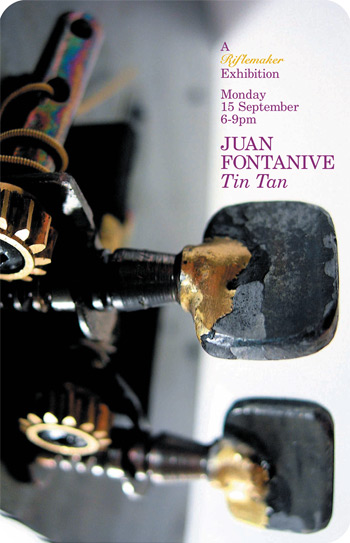
at Riflemaker 15 September - 8 November
"...I like to make things that dance"
Juan Fontanive's debut exhibition at Riflemaker consisted of a room of 'paper films'; mechanical flipbooks housed in tin cannisters reminiscent of an ammunitions factory clock or a 16mm cinema projector. These small modules, spools of paper attached to the wall or suspended on thin stalk-like legs delivered a form of animated storytelling using revolving hand-drawn leaves of card and flickering super 8 film.
An example of 'film without using light' as a projection source, the 'film' itself happens and exists inside of its own slightly cranky mechanism.
For 'Tin-Tan' Fontanive (b.1977 Cleveland, Ohio) has exapanded both the physical scale and the illusionary aspect of the machines. The themes remain the same, sequential repetition of motion linked by a supposed and imagined narrative. The machines create natural 'shadows' and also have a uniquely comforting sound as the pages of paper or metal fall much like the turn of the film-sprocket of a hand-turned camera. There is both comfort and an element of nostalgia in the resulting combination of both the rhythmic visual and sonic image.
"My influences include clocks, drums, repetition, things that hang from the ceiling. Physical quarrels, relationships (of objects), tigers, and the persistence of vision. Literary influences are Borges, Tolstoy, Chekhov, and the theorists Derrida and Althusser. Also, memory is a good source for ideas - I've been thinking recently a lot about the house I grew up in and dreams I've had about that house."Juan Fontanive.
at Riflemaker 15 September - 8 November
"...I like to make things that dance"
Juan Fontanive's debut exhibition at Riflemaker consisted of a room of 'paper films'; mechanical flipbooks housed in tin cannisters reminiscent of an ammunitions factory clock or a 16mm cinema projector. These small modules, spools of paper attached to the wall or suspended on thin stalk-like legs delivered a form of animated storytelling using revolving hand-drawn leaves of card and flickering super 8 film.
An example of 'film without using light' as a projection source, the 'film' itself happens and exists inside of its own slightly cranky mechanism.
For 'Tin-Tan' Fontanive (b.1977 Cleveland, Ohio) has exapanded both the physical scale and the illusionary aspect of the machines. The themes remain the same, sequential repetition of motion linked by a supposed and imagined narrative. The machines create natural 'shadows' and also have a uniquely comforting sound as the pages of paper or metal fall much like the turn of the film-sprocket of a hand-turned camera. There is both comfort and an element of nostalgia in the resulting combination of both the rhythmic visual and sonic image.
"My influences include clocks, drums, repetition, things that hang from the ceiling. Physical quarrels, relationships (of objects), tigers, and the persistence of vision. Literary influences are Borges, Tolstoy, Chekhov, and the theorists Derrida and Althusser. Also, memory is a good source for ideas - I've been thinking recently a lot about the house I grew up in and dreams I've had about that house."Juan Fontanive.