 |
 |
 |
JOSÉ-MARIA CANO
'La Tauromaquia'
(The Art of Bullfighting)
Monday 1 June - Saturday 19 September
|
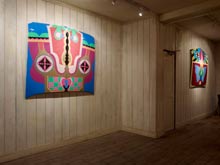
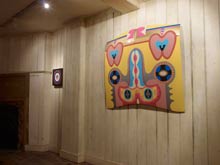
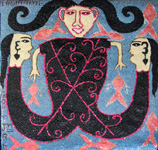
CONTEMPORARY TAPESTRY
Friday 8 May - Tuesday 26 May
|
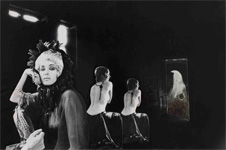
WILLIAM S.BURROUGHS' CABINET
Monday 1 June - Saturday 12 September
|
JOSÉ-MARIA CANO
'La Tauromaquia'
(The Art of Bullfighting)
Monday 1 June - Saturday 19 September


Press release
La Tauromaquia, a series of one hundred small drawings celebrating the art and ritual of bullfighting by José-Maria Cano (b. Madrid 1959), go on display in an exhibition of the same name at Riflemaker, from 2 June.
José-Maria Cano (b. Madrid 1959) is internationally known for his ongoing series of paintings, The Wall Street 100, one hundred life-size portraits made from paraffin wax which consider their subject from an economic point of view only. Among the 100 are Francois Pinault, Alan Greenspan, Barack Obama and Bernard Madoff.
In contrast to the grand themes of power and money addressed by Cano in The Wall Street 100, the delicate ink on paper drawings that make up La Tauromaquia are intimate and small. They depict matadors, picadors, bulls and the arena in the preparation for and performance of ‘la corrida’ while conveying the Act of Faith and pageantry involved.
Cano has spent time watching bullfights and befriended many of those involved in the event, from famous toreros to breeders of the Spanish ‘toro bravo’. He follows Goya, Picasso, Lorca, Hemmingway, Orson Welles, Robert Graves and Norman Mailer who are among those writers and artists inspired by the bullfight, fascinated by the ceremony of the event, rather than the controversy that surrounds it.
Similarly it is the dramatic dance between man and beast and the psychological relationship that develops between them on which Cano focuses. In a work entitled ‘If you want to know what will happen, look at their eyes before the bullfight’, the bullfighters are lined up, preparing for the fight, depicted in a state of deep contemplation prior to entering the ring; whilst in ‘José Tomás in Madrid’ we share in the crowd’s adoration of the torero.
‘I think I have a right to speak about bullfighting, because I was, for a while, I don't quite know why, but I was, an aspiring bullfighter. For me a bullfighter is an actor facing real things. I spent a good deal of time around the ranches where fighting bulls are raised. But don't be worried, you don't have to approve of bullfights, I don't ask you to, and I certainly wouldn't dream of defending the spectacle. I was personally fascinated by the spectacle as a 'whole' but whatever your attitude may be, remember that you can plug for the bull and there will be no hard feelings about it.’
Orson Welles, 1955
The ritual of bullfighting has ancient connections and thus references to it have made their way into language and customs. The words Europe (Europa) and Italy have bovine roots and Cano’s series Verónicas - the most frequently used cape 'manoeuvre' - is named after Saint Veronica who held out a cloth to Christ on his way to the crucifixion. Despite opposition to the spectacle, bullfighting is still integral to Spanish society - almost a million people watch bullfights in Spain each year - and it is also practised in parts of France, Portugal and many Latin American countries.
In 1994 Cano composed an opera - Luna - with a Spanish theme in which Placido Domingo and Renée Fleming take the lead roles. For La Tauromaquia, a special version has been compiled to accompany the exhibition.
The Wall Street 100 has been exhibited in Moscow, Prague and Spain. It will arrive in London in Spring 2010.
Cano on the bullfight
‘Since I was very small I always knew how to 'torear de salón'. In other words, I understood the principles of what should be done in front of a bull, having practiced with my father. Even then I was attracted by the contrasts within the act, or 'ceremony'. The bullfighter as feminine fact and the bull as masculine fact.. Intelligence and instinct. Manipulation and natural condition. The colours of the sacred pageant set against bull black. And of course, life versus death.
The recording of this elaborate procedure would be a daunting task for any Spanish artist, each of whom will have been inspired by the same irresistible force while, in my case deciding to use only the most traditional of materials, pen and ink, with which to portray it. The bullfighting art, La Tauromaquia, is the most ‘plastic’ of all plastic arts. But the representations of it over the course of thousands of years have in general been the most formal.
Since Cretan and Roman times there have always been bulls and bullfighters willing to etch this relationship in the sand, and artists endeavouring to create a most expressive realisation of truth, or ‘faith’, if you like. In order to depict the bullfight, the artist must achieve a fine balance between technique and inspiration. One cannot draw without a degree of craftsmanship just as one cannot survive in the ring without technique, and one should never bullfight without the inherent element of art. The act of drawing is almost as reckless as that of bullfighting. Drawing is vanity itself, doomed to remain no more than a fraudulent mannerism if it does not manage to transport, transform and possess the personality of the one who draws. Just like the act of bullfighting’ .
José-Maria Cano, Madrid, April 2009
For further press information or images please contact:
Jeanette Ward, Theresa Simon & Partners 020 7734 4800 / 07729 930 812 jeanette@theresasimon.com or Tot Taylor, Riflemaker: 07792 706494
Visitor information
Riflemaker 79 Beak Street, Soho, London, W1F 9SU
Telephone: 020 7439 0000
Website: Riflemaker.org
Opening hours: Monday - Friday 10am – 6pm, Saturday 11am – 6pm
Riflemaker is co-directed by Virginia Damtsa & Tot Taylor.
José-María Cano
La Tauromaquia: The Art of Bullfighting
Riflemaker 79 Beak Street, London W1
Tuesday 2 June – Saturday 12 September 2009
Press and private view: Monday 1 June, 6-9pm
ALEXEY KISELEV & DANILA POLYAKOV
Monday 22 June - Monday 29 June
''What is decided by it is nothing less than the composition of the next generation" Arthur Schopenhauer
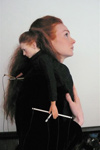
Artist/Performer Danila Polyakov and photographer Alexey Kiselev obviously never heard the above quotation. Born in Moscow in 1983, and Ekaterinburg 1976, the two Russian artists present their collaboration
The Naughty Noughties for one exclusive week only at Riflemaker.
The project displays the results of a two-year experiment and visual reincarnation of Danila that were collected by Alexey Kiselev and combined to make one story.
Danila Polyakov uses the body itself as a language tool to express his natural narcissism. His only wish is to be recorded - to remain forever in the present moment of action without making any common sense to the viewer.
The Naughty Noughties is presented in three dimensions: poster, performance and video.
Curated and presented by Oxana Bondarenko.
www.thejuly16.com
The July 16 presents
On-line broadcast of Alexey Kiselev's and Danila Polyakov's "The Naughty Noughties" exhibition opening night at Riflemaker from London to Moscow.
Live performance, video, interview with the artists will be translated in a real time to the Moscow press event.
When: 22 June 6 - 9 pm.
Where: Firma, Nizhniy Susalniy pereulok 5/5A, Moscow or
www.thejuly16.com
WILLIAM S.BURROUGHS
'Life-File' at Beak Street
from 16 December


WILLIAM S. BURROUGHS
(b.1914, St.Louis, Missouri - d. Lawrence, Kansas, 1997)
'LIFE-FILE'
Previewing from Monday 1 December
Opens Monday 15 December - Saturday 10 January
The author of Naked Lunch continues to have an overwhelming effect on artists, writers and musicians who relate to his cut-up logic, non-linear lifestyle and all round 'looseness'. Riflemaker mount their second exhibition of William Burroughs visual art when 'Life-File' opens to coincide with the exhibition 'Burroughs Live'; part two of the Royal Academy's GSK Contemporary series.
Burroughs began painting the file-folders almost 'by accident'. The folders were always at hand, being necessary to the profession of writing itself because of the constant need to organize papers and ideas. The author originally used the folders to mix pigments and colours before observing that they could be viewed as artworks in themselves. From 1982 onwards Burroughs spent a great deal more of his time making visual art for its own sake including a number of file-folders featuring 'automatic calligraphy' partly inspired by his friend Brion Gysin. A large group of works were painted during the period 1990 - 1992, some of which were shown at the Seibu Shibuyu Seed Hall in Tokyo in spring of 1990 and at the Seibu Akarenga Hall in Sapporo in summer of that same year.
Burroughs would adorn the folders inside and out using a mix of ink and gouache with gestural brushstrokes sometimes mixed with glitter or fluorescent paint and a line or two of text. The exhibition features fifty such works, now on show for the first time in London, representing every area of Burroughs creativity, combining as they do literature, visual mark-making and performance, all derived from the very birth of an idea itself.
Other works in the exhibition include shot sculptures, spraycan and photographic collages, stencil works and screenprints.
'Life-file' is presented in collaboration with the Estate of William S. Burroughs.
DEMONS, YARNS & TALES
at Design Miami
3-6 December
Image: Kara Walker.
Francesca Lowe, Gavin Turk, Julie Verhoeven & Jaime Gili are four Riflemaker artists featured in this exhibition of contemporary tapestries in due in Miami for the Art Basel/Miami week following the exhibition in London. For much more go to
www.bannersofpersuasion.com